
Most VCs look for signals of traction. I look for signals of intent. I want to understand your system prompt, your beliefs about what should exist and why. Your taste level. Your emotional durability. Your ability to update your assumptions without losing your vision.
When my father built our family well in rural Romania, the neighbors stopped digging at seven meters. Good enough, they said. My father dug to thirty-three.
Not because he had to, because shortcuts compound. A drought in year five would mean digging twice. A poorly placed wheel would mean my mother couldn't draw water alone. A handle too high would mean I couldn't help as a child.
He taught me that constraints don't excuse mediocrity, they demand ingenuity. That if you think hard enough, you can build quality with little money. That with fewer people and less resources, you can build better things than richer teams who don't care about craft.
That's where my design philosophy began, before I even knew what design was. It's the same force that got me from looking after goats in rural Romania to designing a space station for NASA. And it's what I look for in founders today.
> What I look for in founders →

In physics, motive force causes motion. In rockets and in founders, pressure isn't the enemy, it's the prerequisite for lift. But founder motive force is different. It's the internal drive that remains constant through market crashes, cofounder breakups, and moments when everyone loses hope.
This isn't resilience. It's obsession refined into purpose.
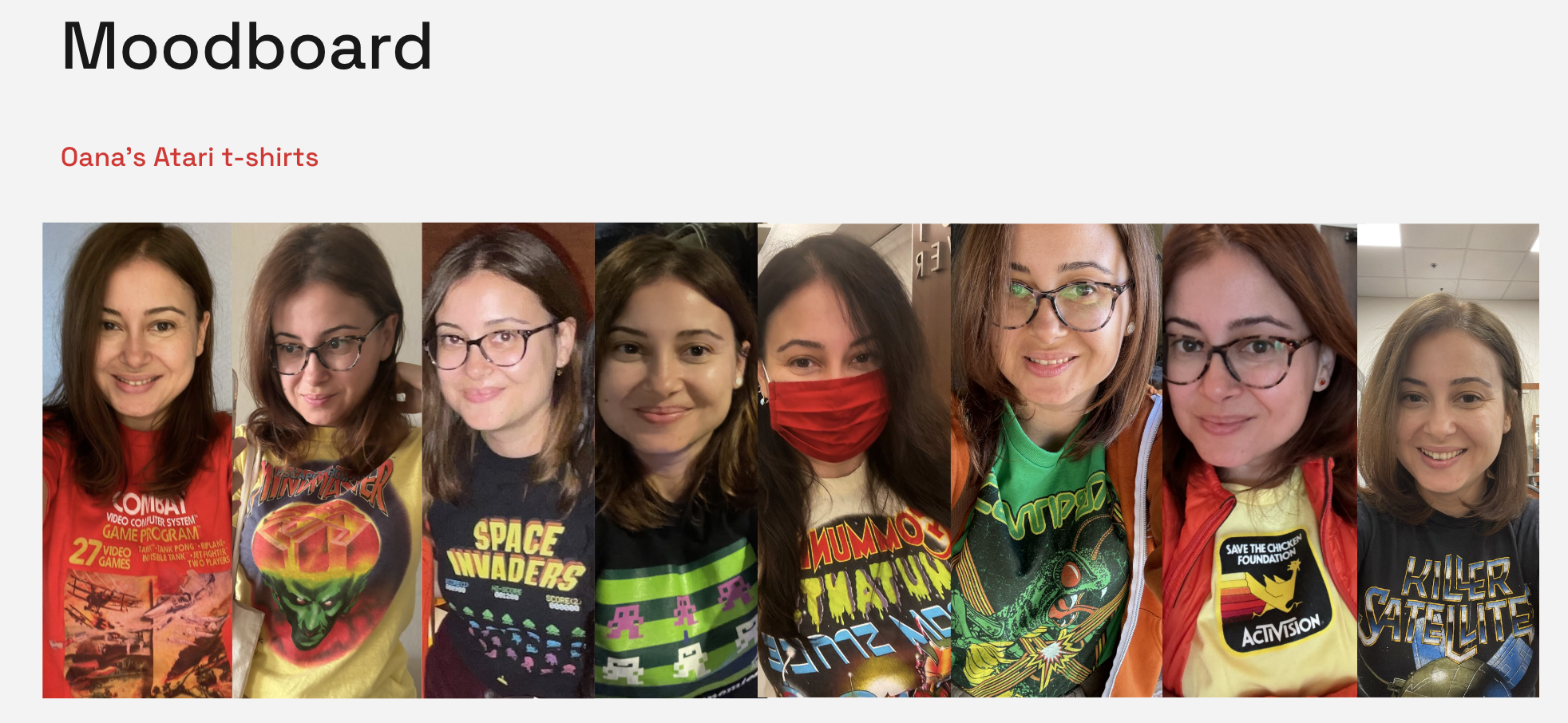
Some investors pretend to care about design. I've been collecting vintage Atari shirts for years because they represent when technology and art were inseparable. This isn't cosplay, it's philosophy lived daily.
The Motive Force logo is a nod to Atari. Like Apple, Atari's success came from technological breakthroughs integrated with art and design. They understood what most miss: design isn't making things pretty. It's creative problem-solving at the intersection of human need and technical possibility.
Beautiful software isn't decoration. It's when code architecture mirrors user intent so cleanly that complexity disappears. When every interaction feels inevitable rather than engineered. When engineers want to read the codebase and customers forget they're using software at all.
The philosopher Plotinus called it "unity in multiplicity", when individual elements serve a greater whole so perfectly that beauty emerges. The Unix philosophy echoes this: "Do one thing well. Make programs work together." Dieter Rams knew it: "Good design doesn't dominate users, it helps them."
Beautiful software starts with deep thinking about what should exist and why. Then it's built through daily acts of craft, not paralyzing perfectionism, but the kind of sustained pride in work that compounds into something extraordinary. These founders ship regularly, but each release carries the fingerprints of someone who couldn't help but care.
.png)
Founders with taste attract talent without recruiters. Products built with care have lower churn and higher NPS. Companies with craftsmanship culture scale more efficiently.
The data is clear: Stripe, HashiCorp, Notion etc. the biggest outcomes come from founders who refused to ship mediocre software. They understood that in a world of infinite software, only the beautiful survive.
Beauty compounds. Quality code attracts quality engineers. Thoughtful design creates passionate users. Passionate users become evangelists. The flywheel accelerates.
.png)
Sometimes I help you hire your first designer by finding someone who's been exposed to excellence. Sometimes I connect you with a customer who'll give you truth, not politeness. Sometimes I'm the only person who sits with your idea long enough to really get it.
When a portfolio company's onboarding was failing, I didn't send them a growth hacker. I found the designer who built HashiCorp's beloved developer experience, someone who understood that onboarding isn't a funnel, it's a first impression.
When another founder struggled with go-to-market, I didn't give advice. I connected them with a founder who'd solved the exact same problem transitioning from engineer to founder sales.
I bring motive force by matching you with people who've already overcome similar challenges. Not from a spreadsheet, but from years of relationship building with people who have taste.
I won't push you to grow faster than you can build beautifully. I won't connect you with mercenary talent who are resume building. I won't optimize for the press release over the product. I won't make you choose between craft and growth, the best companies never have to.
If you want an investor who sends a quarterly NPS survey and calls it support, there are plenty of options. I'm building something different.
.png)
We don't need more software. We need software that makes people more capable. Software that respects human attention. Software that lasts.
My parents taught me you can create quality with limited resources through deep thinking and unwavering commitment to doing things right. Today's founders have better tools than ever. Imagine what's possible when you combine those tools with uncompromising standards.
If you're paranoid about small things that don't fit the perfect picture in your head because you know that's where the compound effect lives, in the details no one sees until everyone does, we should talk.
I won't ask for your deck. I'll ask what you're obsessed with.
Let's build software worth building.


